
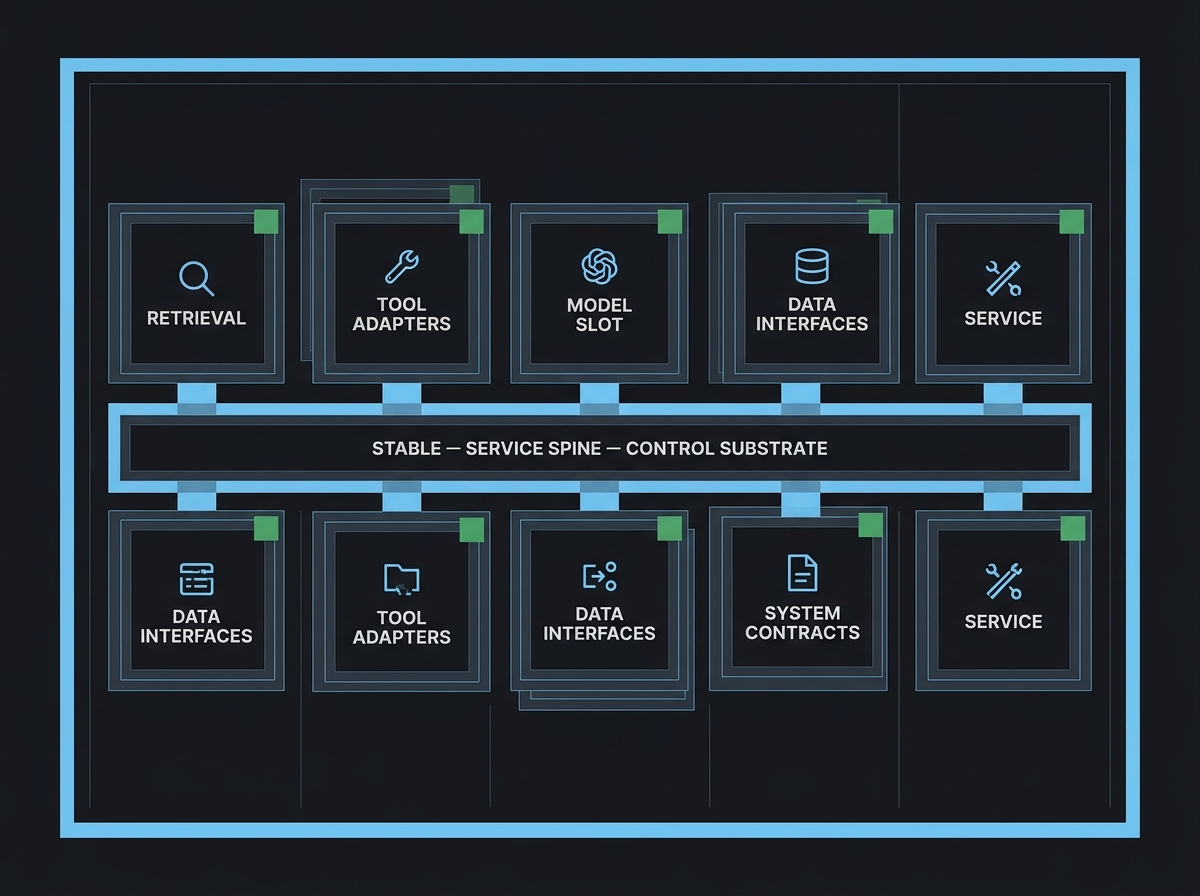
01 / principle
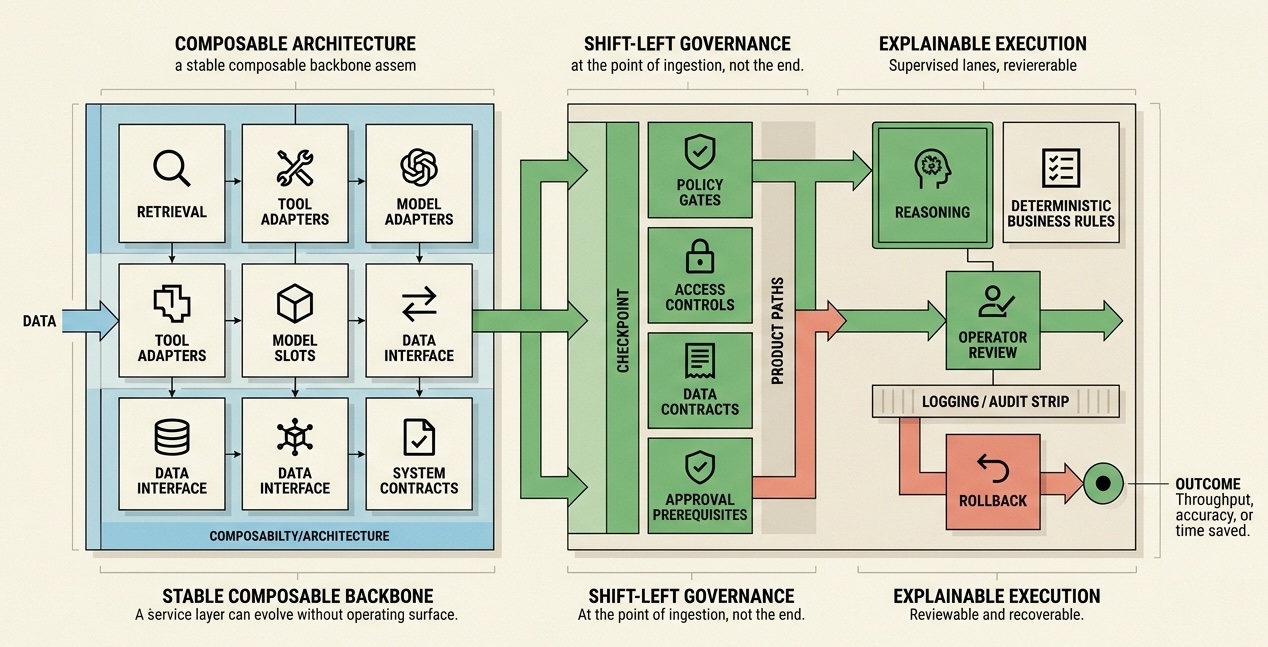
Composable architecture
Build from interoperable services, retrieval layers, and tool integrations instead of new monoliths.
This keeps the automation layer adaptable as models, systems, and regulations change.
We design composable AI systems for organizations dealing with legacy infrastructure, approval-heavy workflows, and real operational risk. The goal is not a demo. The goal is controlled execution that holds up in production.
Live control dossier
Active module / 01
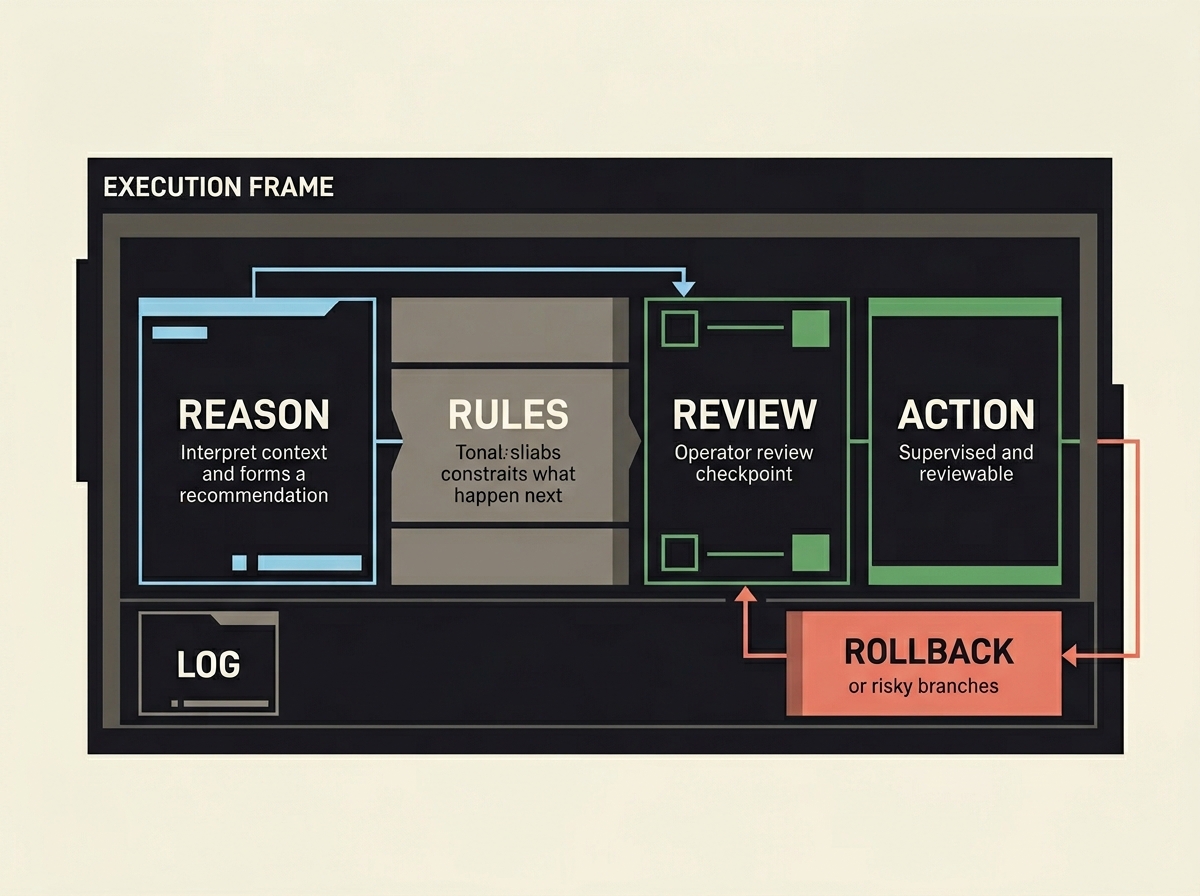
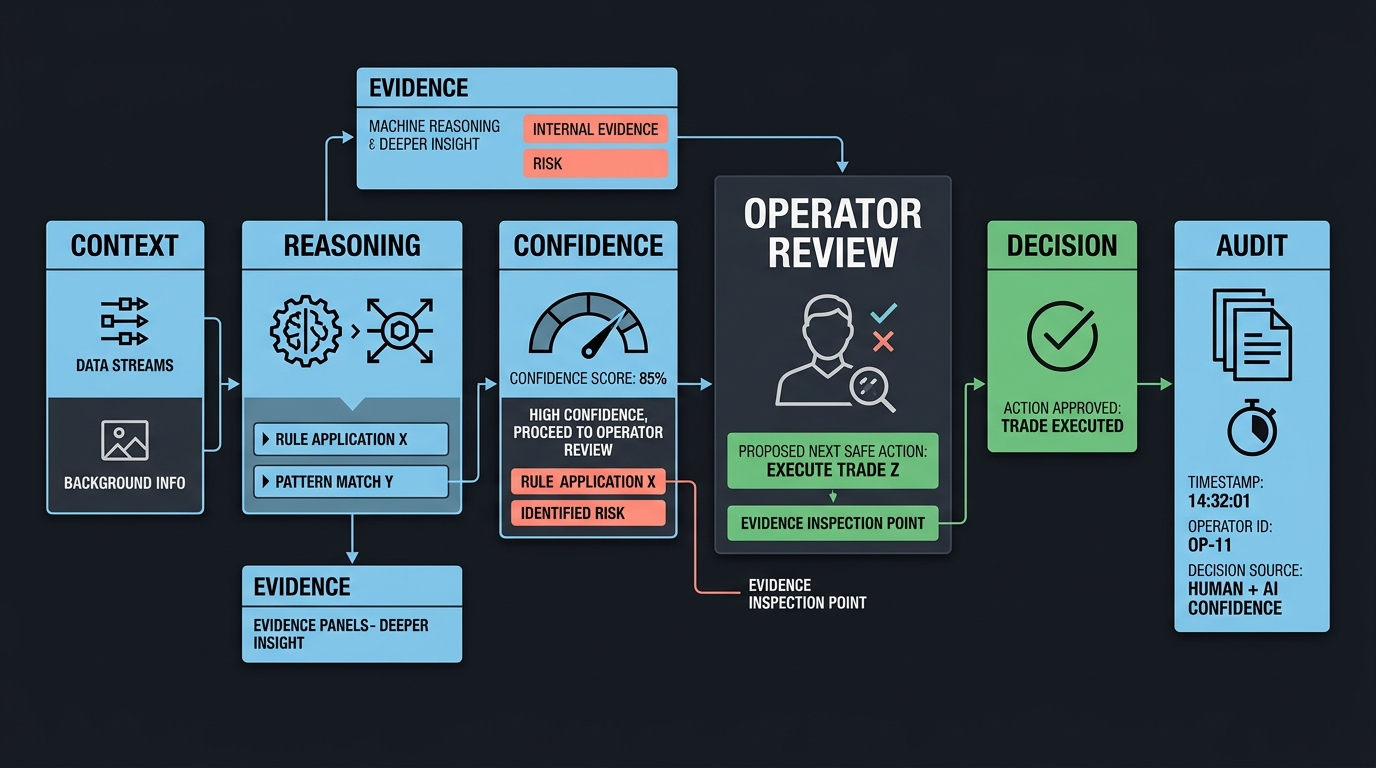
Model reasoning sits inside a supervised operating layer that contains policy, review, rollback, and outcome controls before touching production systems.
Inspection notes
Target scope
Who this system is for, how it is delivered, and the operating stance it is built to hold.
01 / Ideal client
Ambitious with AI
Teams with enough workflow complexity to justify durable automation.
02 / Delivery model
Outcome-led
Architecture, guardrails, and operating change tied to measurable value.
03 / System stance
Audit-ready
Explainable AI constrained by deterministic rules, approvals, and logs.
Built into launch
Baseline delivery conditions that stay in-path from the first supervised rollout.
01 / Legacy systems
CRMs, ERPs, EHRs, and internal knowledge stay in the loop.
02 / Human control
Approvals, escalations, and rollback paths are designed in.
03 / Measured launch
Rollout scope ties to throughput, time saved, or accuracy.
Operating model
Each system decision should make rollout safer, supervision easier, and later expansion cheaper.
Capabilities
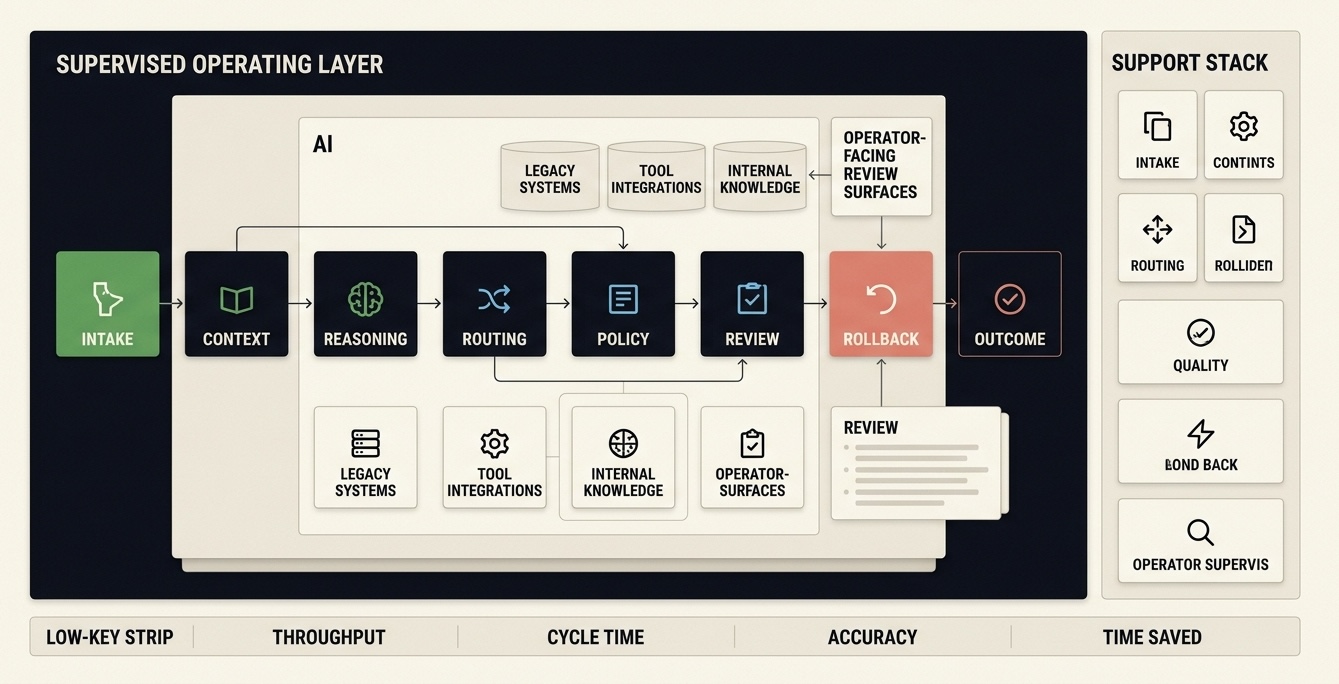
Capability 01
reusable service layer
Design supervised agentic workflows with deterministic routing, approval logic, and exception handling across fragmented operations.
Outcomes
Deliverables
Capability 02
reusable service layer
Design an API-first agent architecture that can reason across CRMs, ERPs, EHRs, analytics stacks, and internal knowledge bases without losing deterministic control.
Outcomes
Deliverables
Capability 03
reusable service layer
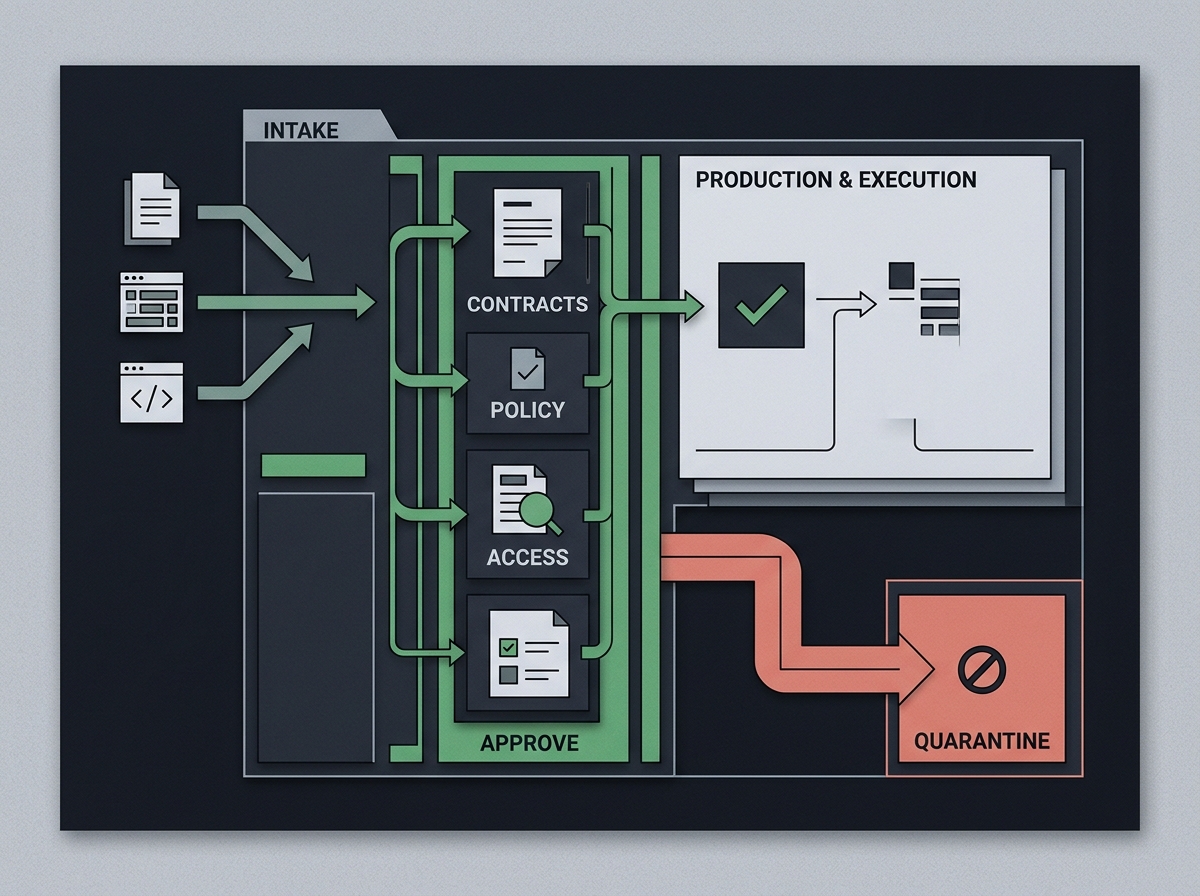
Constrain agent reasoning with deterministic policies, approvals, and rollback paths so regulated workflows stay automatable and accountable.
Outcomes
Deliverables
Capability 04
reusable service layer
Design the control plane people use to supervise AI agents, inspect decisions, intervene in-flight, and continuously tune highly deterministic workflows.
Outcomes
Deliverables
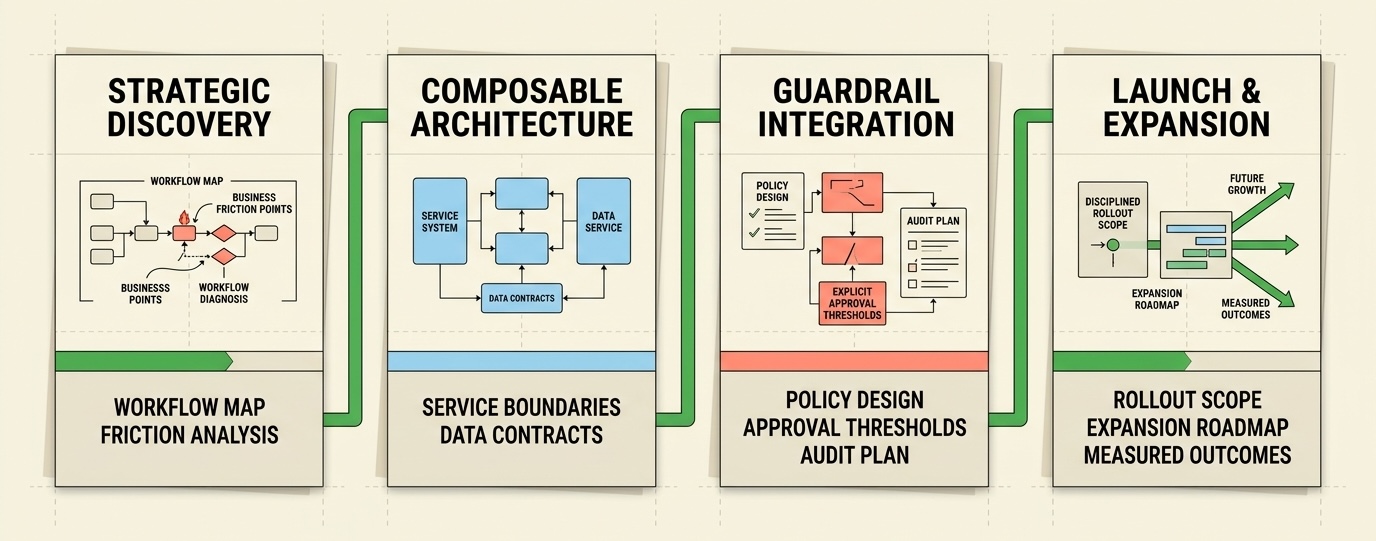
Step 01
Identify where process friction is destroying throughput, accuracy, or speed and define where automation can pay back quickly.
Step 02
Design the service boundaries, model responsibilities, retrieval strategy, and system contracts needed for stable execution.
Step 03
Apply approvals, policy checks, logging, and fallback logic so automation is explainable before it is fast.
Step 04
Deploy the pilot with active operator oversight, measure real outcomes, then scale to adjacent workflows once the control model holds.
Priority sectors
Automation for care-gap remediation, referral operations, prior authorization workflows, and other administrative bottlenecks around clinical systems.
Common pain points
Automation use cases
Agentic workflows for risk operations, underwriting support, fraud triage, and reconciliations that span multiple ledgers and systems.
Common pain points
Automation use cases
Automation for supply chain exceptions, quality workflows, and plant or warehouse coordination where latency creates real cost.
Common pain points
Automation use cases
Agentic coordination for asset health, field operations, maintenance queues, and pricing or demand-response workflows.
Common pain points
Automation use cases
Use agentic systems to automate lead qualification, lifecycle journeys, merchandising workflows, and commercial operations.
Common pain points
Automation use cases
Insights
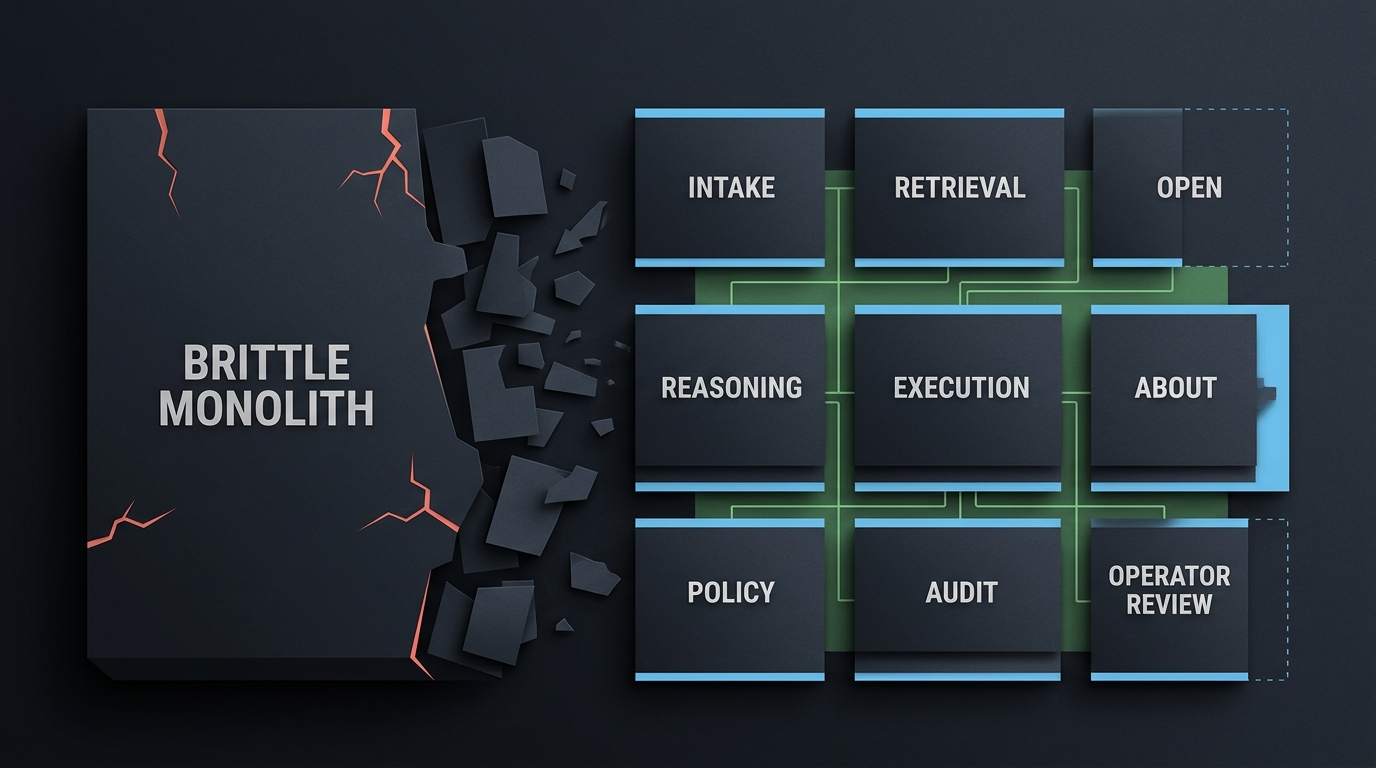
Featured insight / Architecture
Why mid-market automation programs should be built from modular capabilities instead of one-off AI platforms.
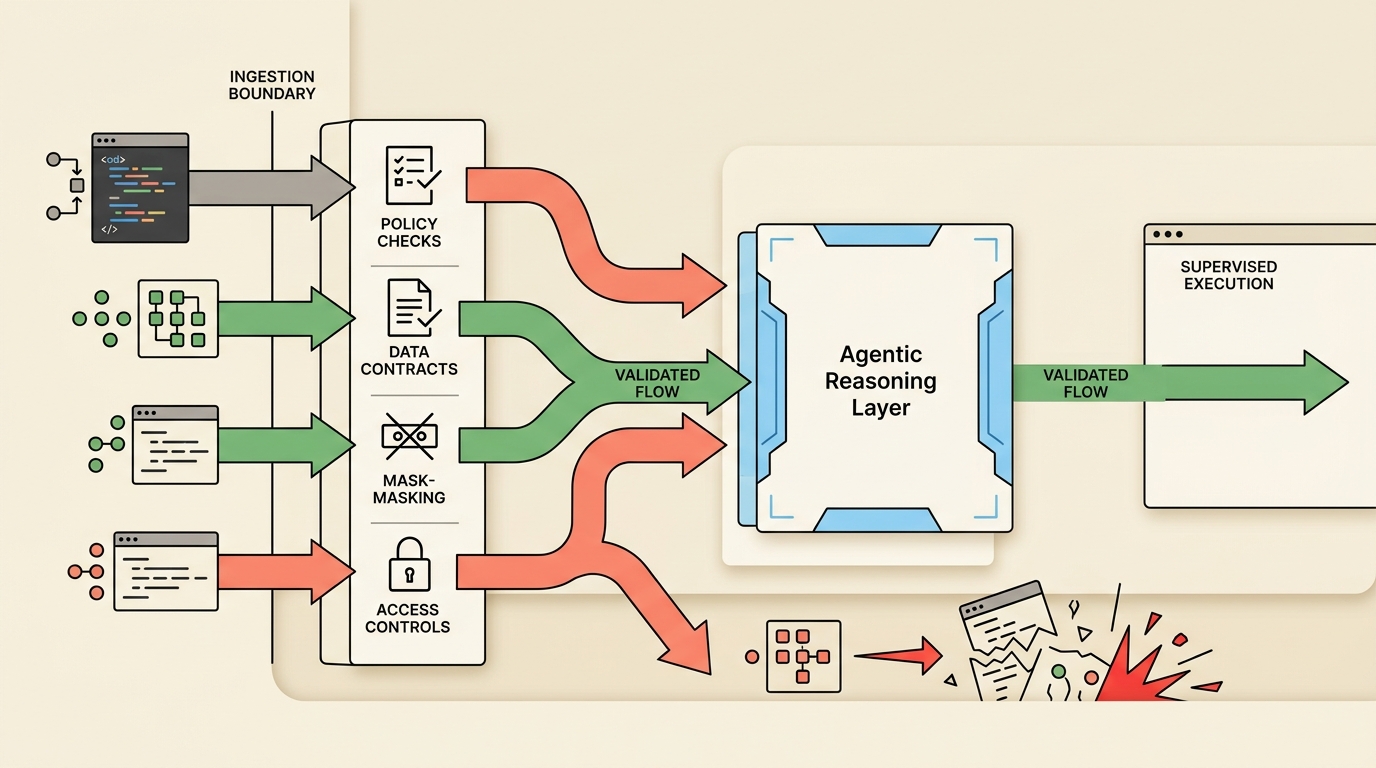
Governance
If governance starts after the agent is already in production, the architecture is upside down.
Operations
Operators do not need mystical intelligence. They need a system that shows its work and hands control back cleanly when confidence drops.
Ready to scope a pilot
Reserve capacity for a brief that defines the pilot, the system boundaries, and the governance stance before implementation starts.
Launch criteria