
Architecture
Composable AI architecture beats custom monoliths
Why mid-market automation programs should be built from modular capabilities instead of one-off AI platforms.
Why monoliths fail in automation
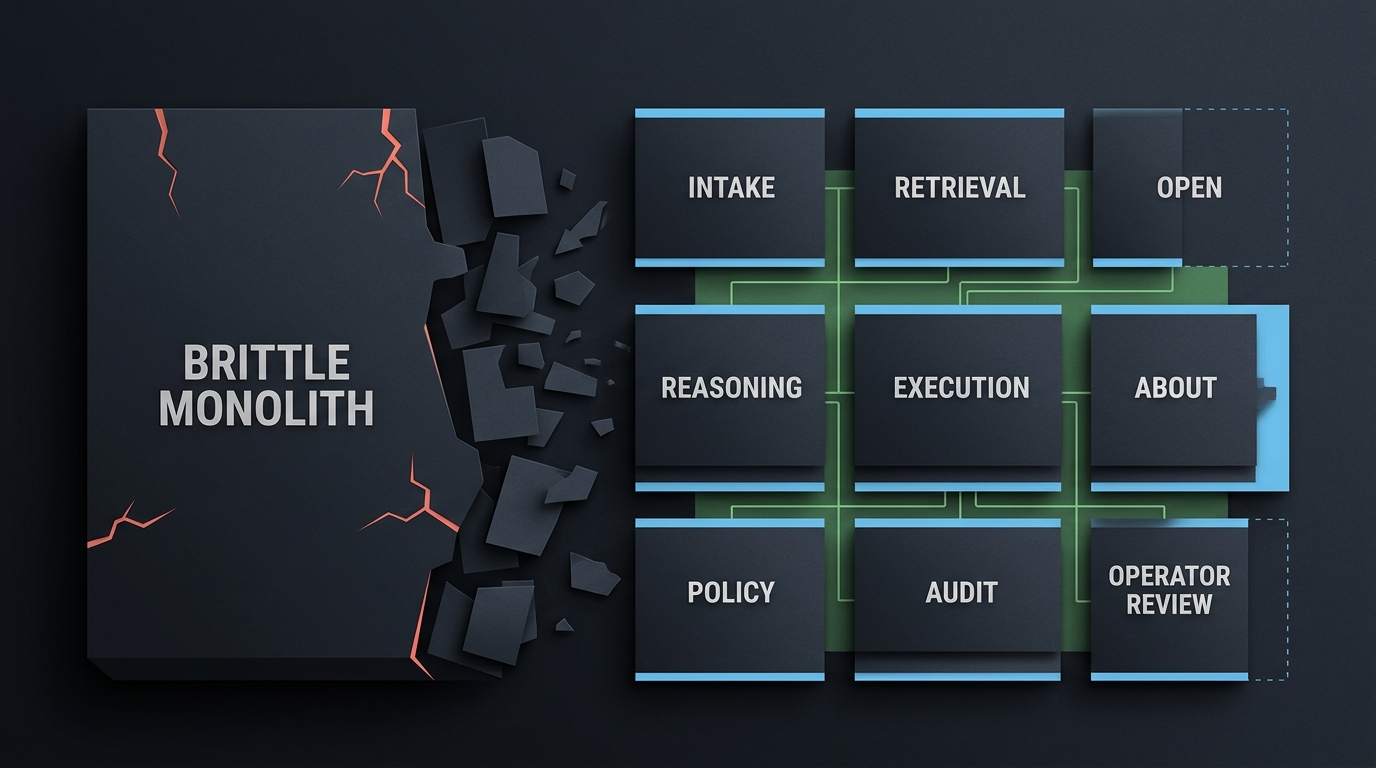
Many failed automation programs share the same root issue: the team tried to layer AI on top of a rigid application stack. When every workflow, model, and business rule lives inside one tightly coupled system, change becomes expensive and fragile.
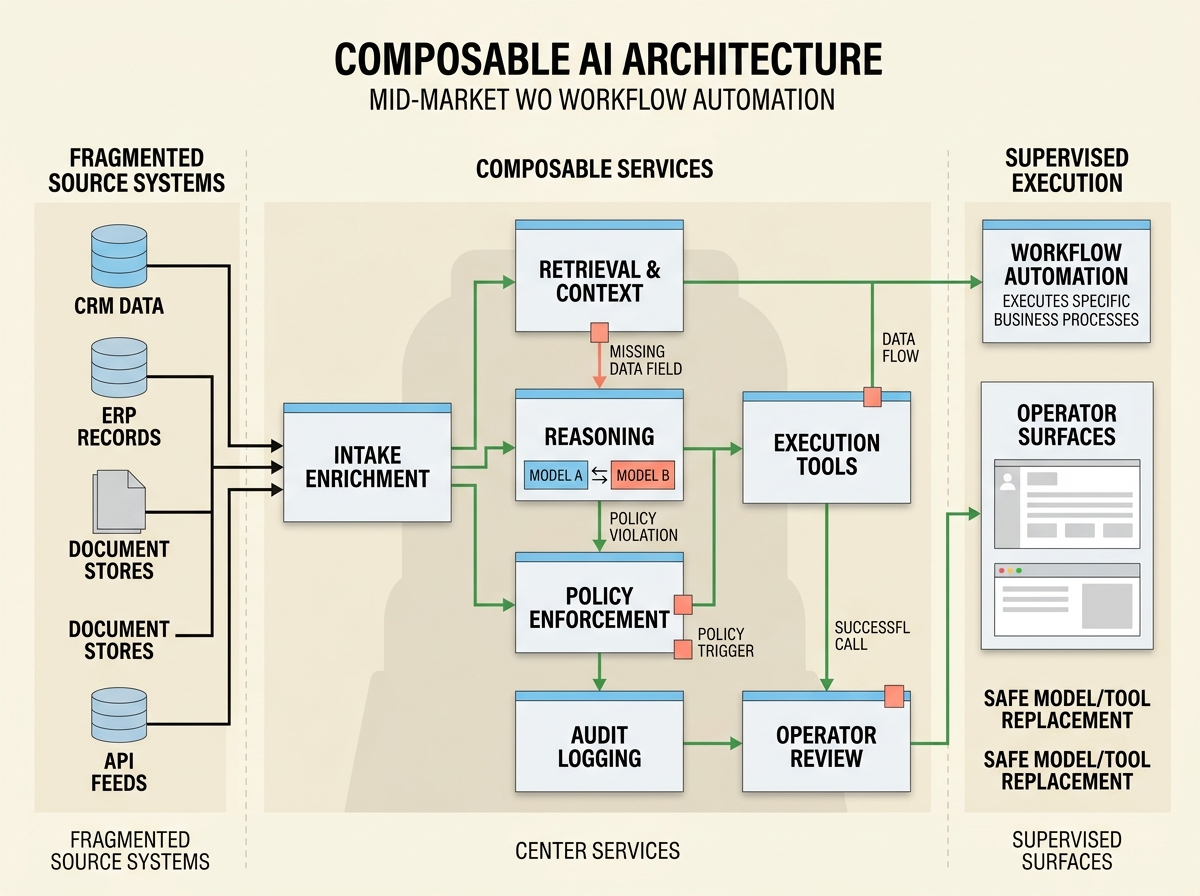
Agentic systems need narrow scopes, explicit tool access, and isolated failure domains. Composable architecture gives you that by separating context retrieval, reasoning, execution, and monitoring into services that can evolve independently.
What composability looks like in practice
A composable stack does not mean endless microservices for their own sake. It means each capability has a clear responsibility: one service enriches intake, one decides routing, one enforces policy, one logs every action.
That structure makes model changes safer. If a better extraction model appears next quarter, you can replace that layer without rewriting the rest of the operating system around it.
The operating payoff
Mid-market teams benefit because composability shrinks the cost of iteration. Pilots can launch against one workflow, then expand into adjacent processes with reusable services rather than bespoke rebuilds.
The result is an automation estate that can adapt as systems, regulations, and vendors change instead of becoming the next legacy platform.