
Process

A disciplinedlaunch pathfor agentic AIautomation.

We scope the workflow, define the control model, and only then automate. That sequence keeps pilots grounded in business value and safe enough to earn trust.

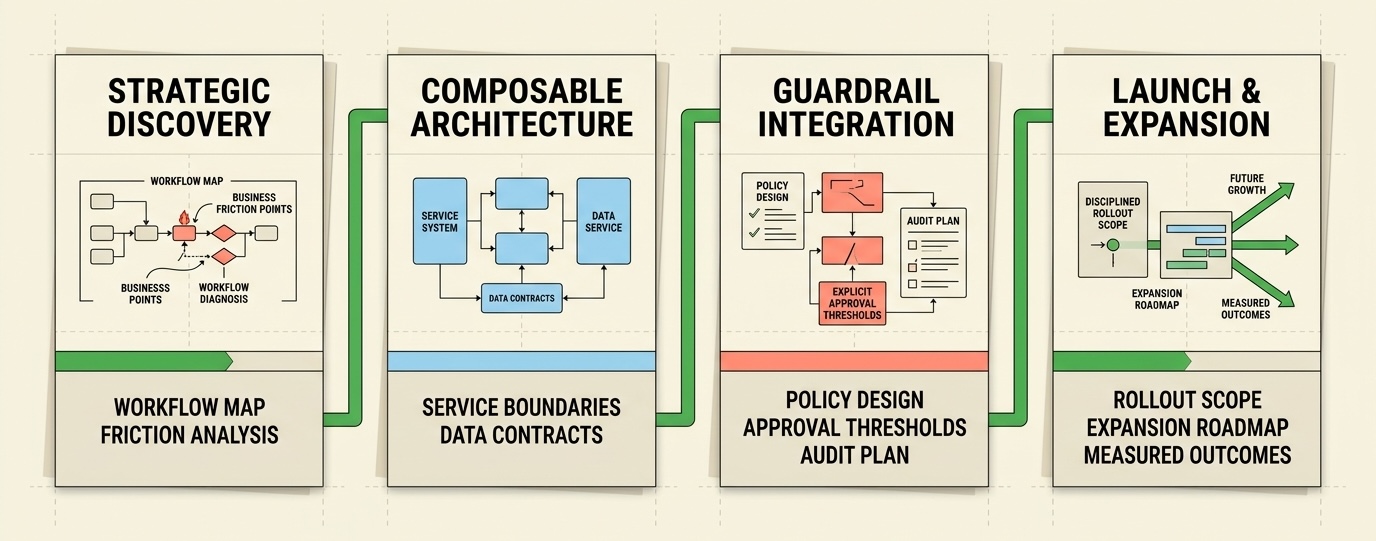
Illustration of the delivery process from workflow diagnosis to controlled launch.

Delivery sequence

From workflow diagnosis to controlled production launch.

Each step is designed to reduce ambiguity. We keep the write set small, the execution logic visible, and the pilot measurable.

01

Strategic discovery

Identify where process friction is destroying throughput, accuracy, or speed and define where automation can pay back quickly.

Current-state workflow map
Friction and exception analysis
Pilot recommendation tied to business value
02

Composable architecture

Design the service boundaries, model responsibilities, retrieval strategy, and system contracts needed for stable execution.

Automation control-plane design
Integration map and data contracts
Success criteria and rollout scope

03

Guardrail integration

Apply approvals, policy checks, logging, and fallback logic so automation is explainable before it is fast.

Approval thresholds and risk controls
Observability and audit logging plan
Human-in-the-loop exception pathways

04

Launch and expansion

Deploy the pilot with active operator oversight, measure real outcomes, then scale to adjacent workflows once the control model holds.

Production rollout plan
Operator training and governance rhythm
Expansion roadmap for phase two

Launch criteria

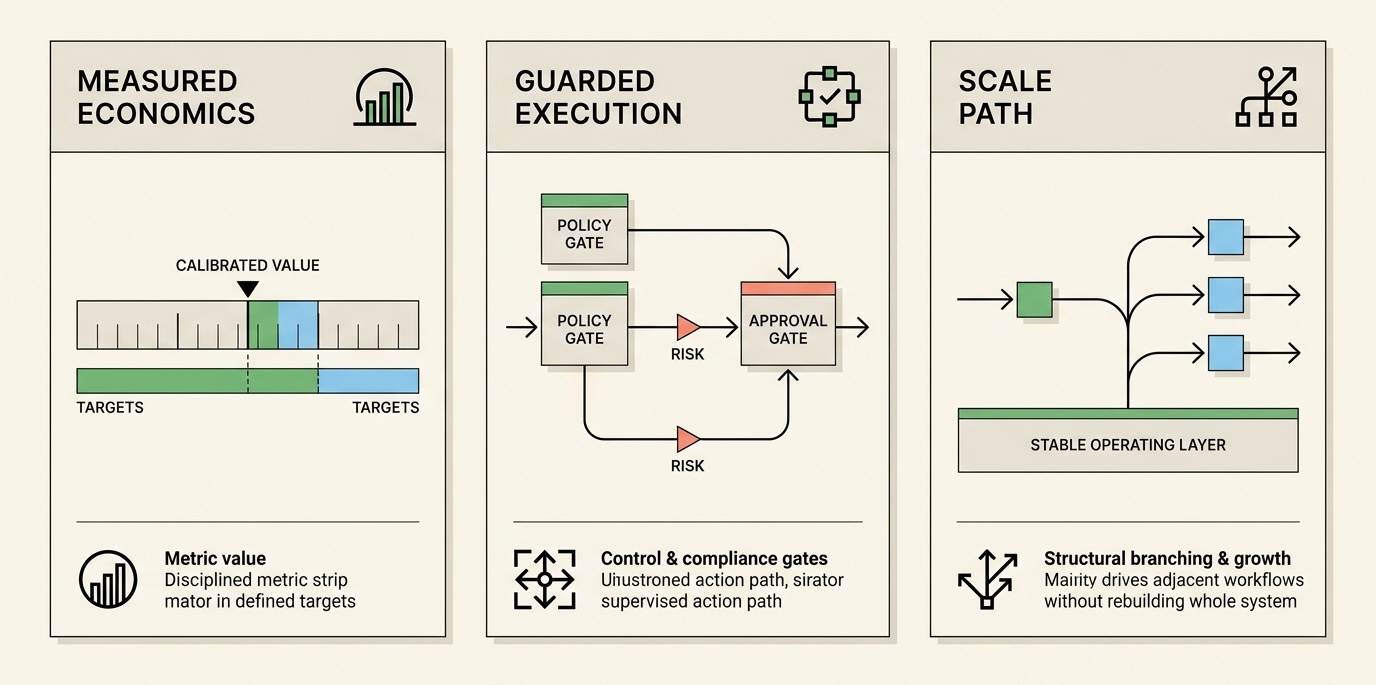
What has to be true before a pilot earns the right to scale.

Launch criteria illustration for determining pilot readiness.

Ready to scope

Bring the workflow, the constraints, and the desired outcome.

Pilot input

The fastest path is one workflow, one metric, and one approval structure we can model with precision.